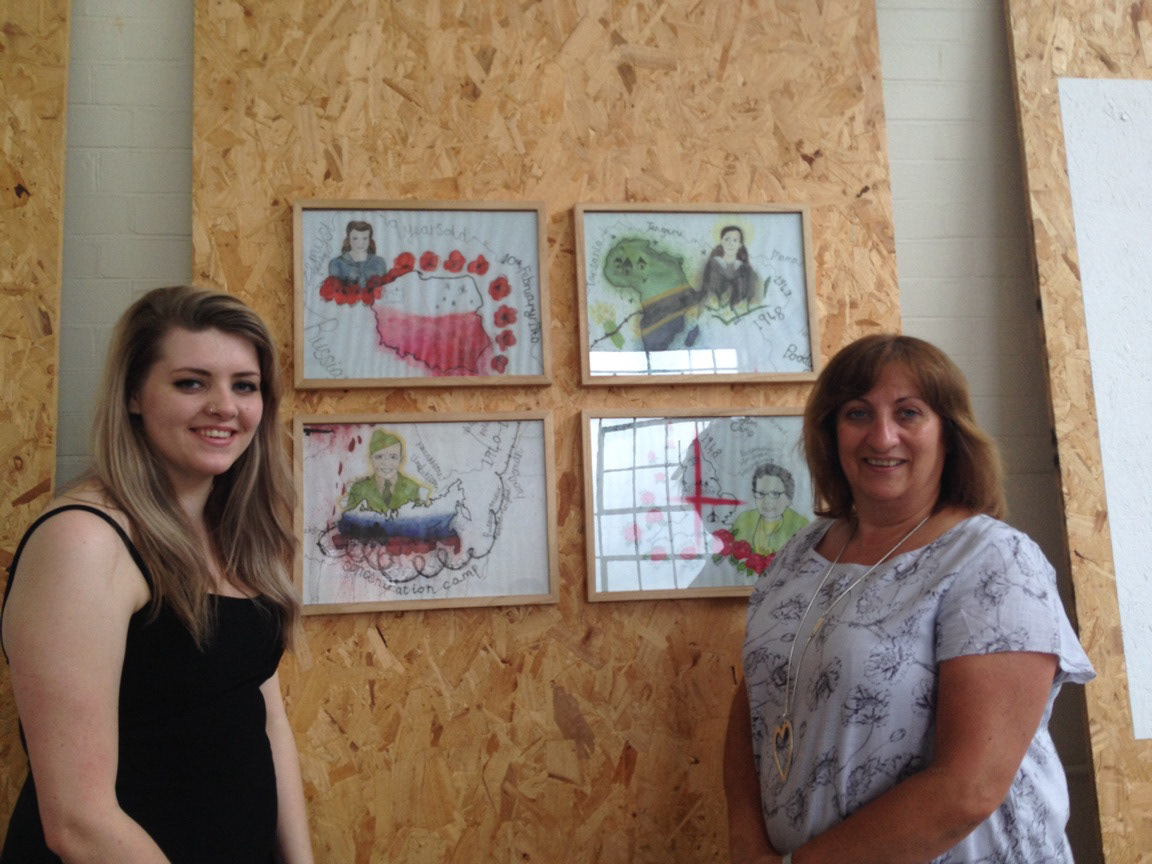
In my last year of Illustration at the University of Northampton we were given a large-scale, self directed project where we could pick any subject and any medium to create an exhibition piece and supported written dissertation to feature in our end of year show.
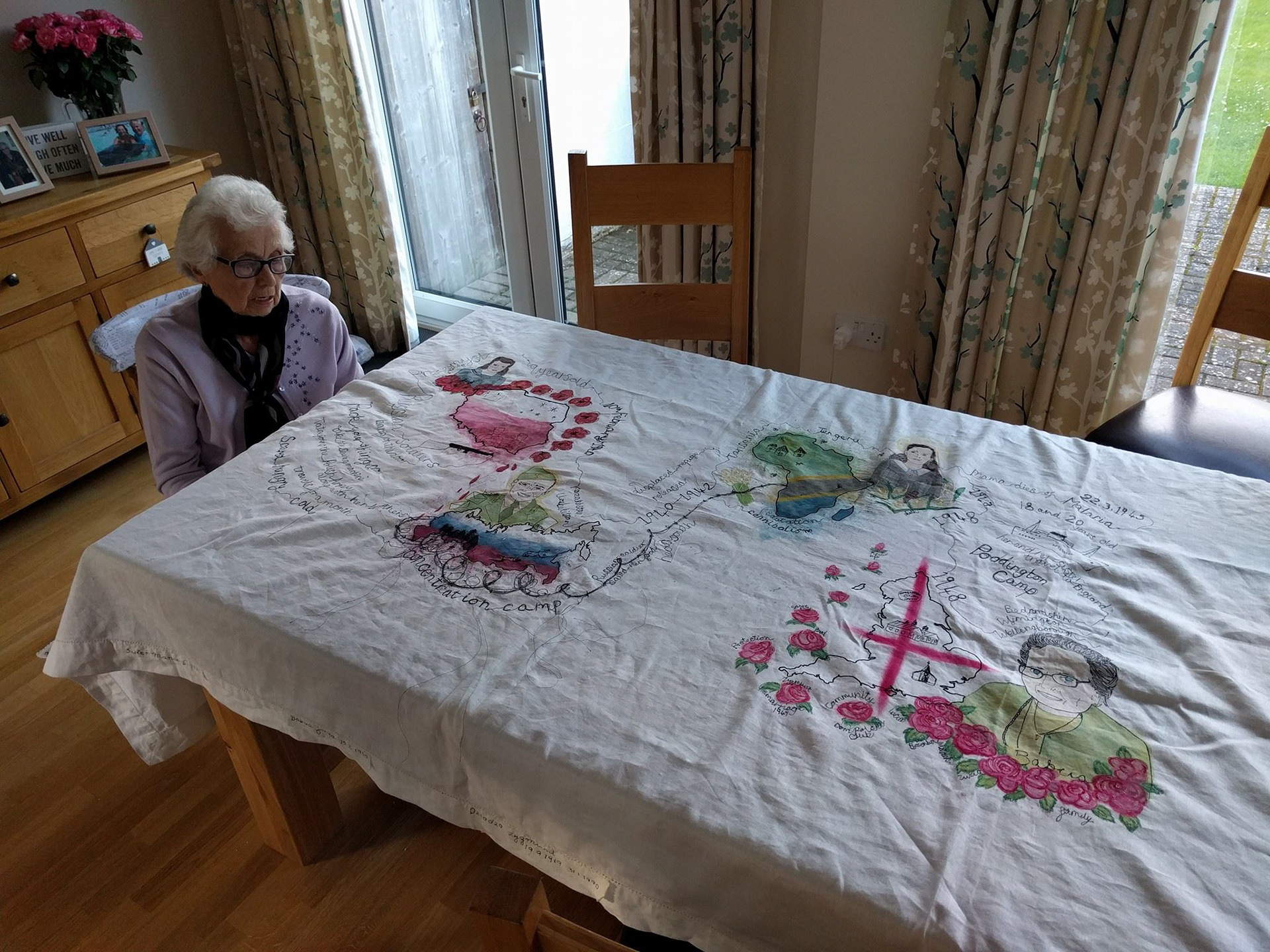
I decided my project would be about my Babcia’s journey from Poland, to Russian concentration camps, to Tengeru, Africa and finally living in Poddington Camp, Northamptonshire. One of her main stories of leaving Poland is around the story of a sewing machine, her mother, a skilled cook, farmer, seamstress and handywoman brought the sewing machine with them when they left Poland so she could make clothes, whether it be to trade for shelter or food, but at least they had clothes.
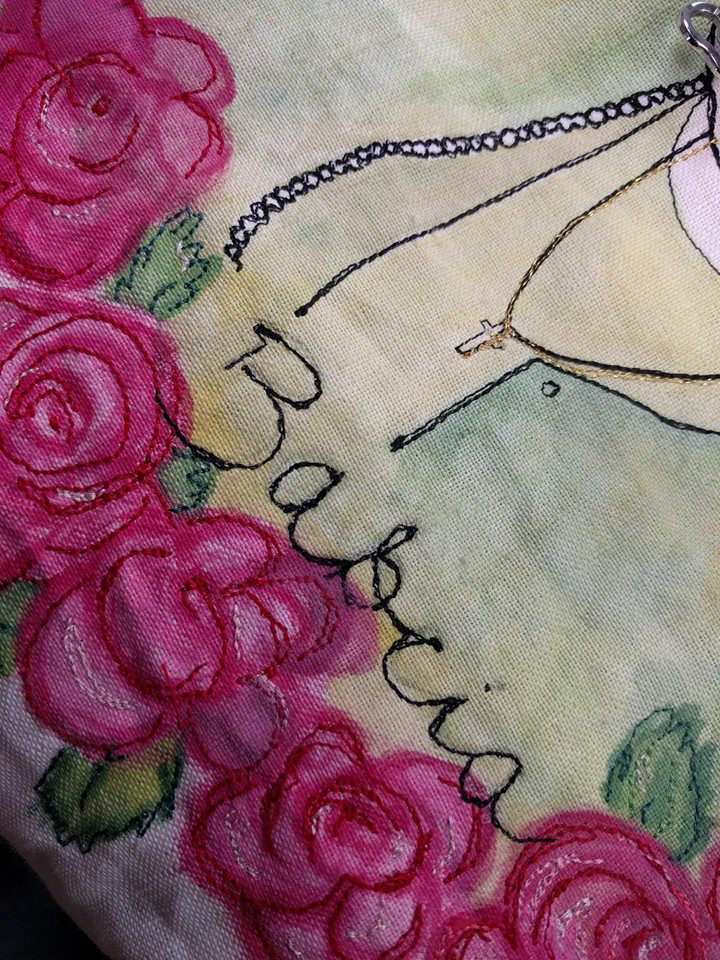
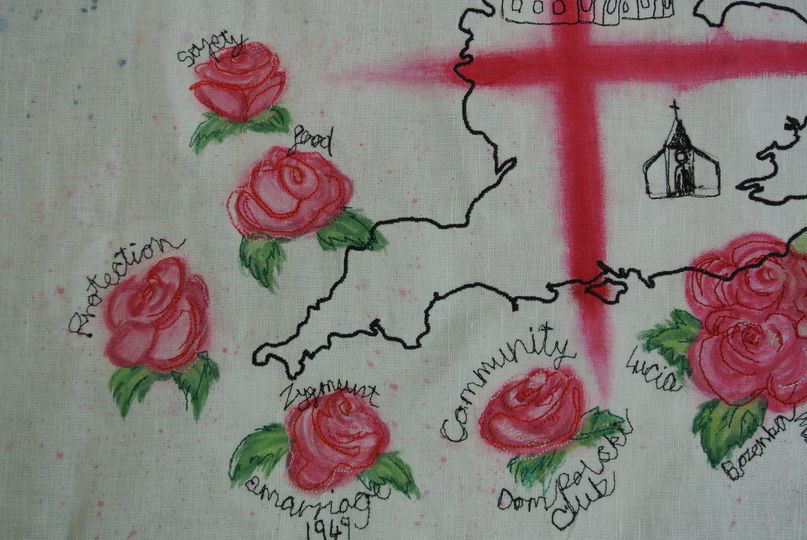
I had a strong skillset with watercolour and mixed mediums, but had only worked with embroidery very slightly for textures so decided on a tablecloth/tapestry to explore embroidery and watercolour. Over the course of the year I created a 8ft by 10ft piece of Babcia’s history, from Poland, her childhood country to England.
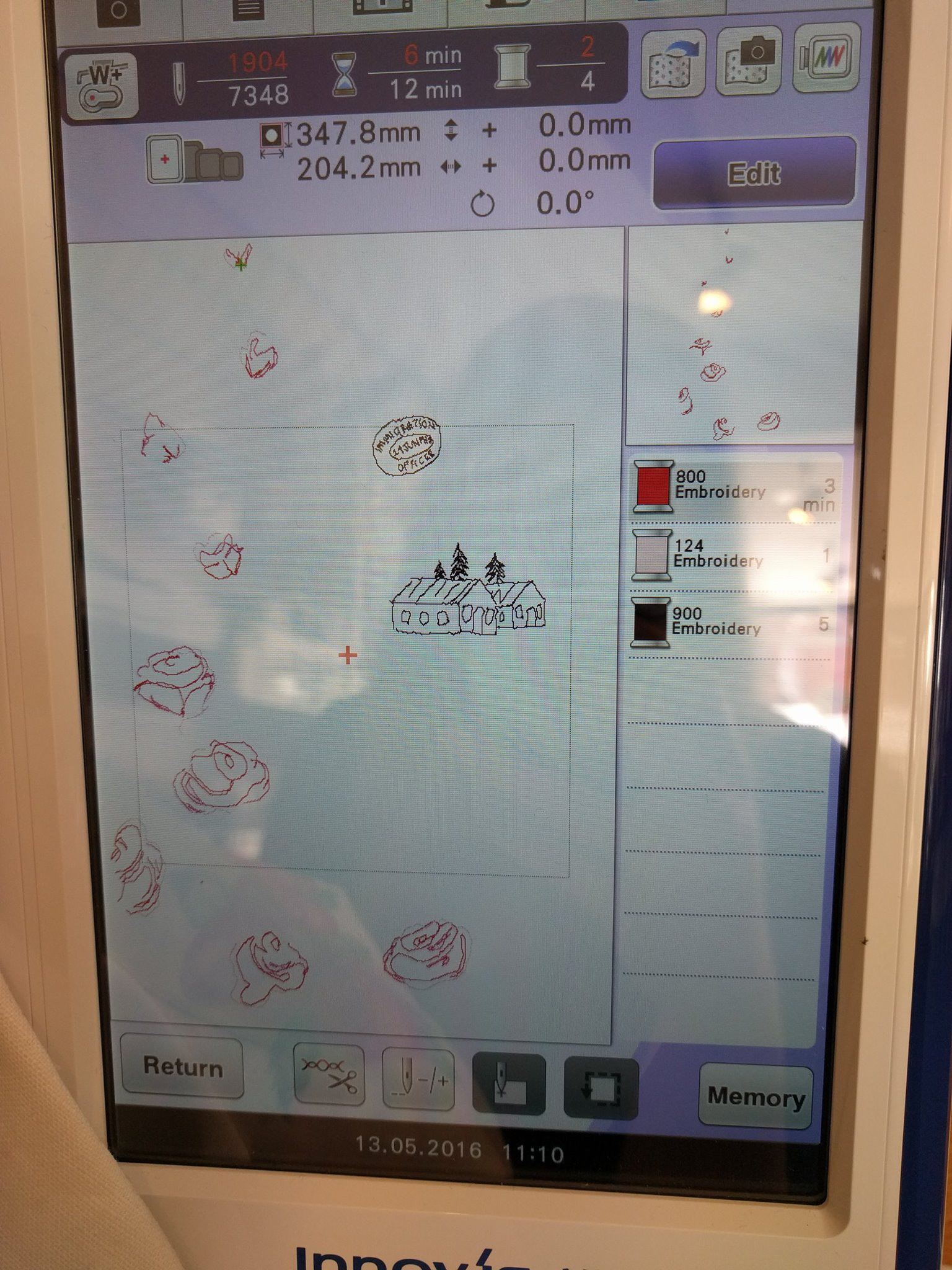
I was very lucky to have my Godparents Jilly and Andy work in a sewing shop at the time who let me use a variety of machines from Brothers to Berninas. I explored free-foot machinery and digital embroidery where I could draw, scan in and export my drawings to be sewn for me.
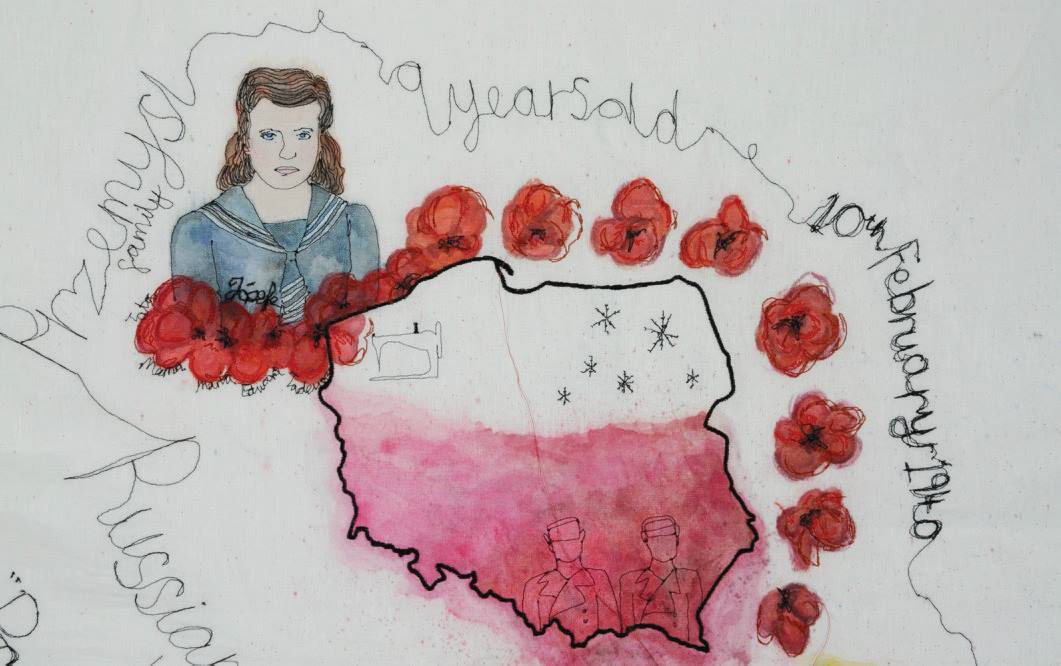
Poland
At the age of 9 years old, just 4 days before her 10th birthday, Babcia and her mother, father, two brothers and sister were taken by Russian soldiers, put in a cattle wagon and sent to a concentration camp. Babcia speaks about one kind soldier who gave her a little of his meal to keep her going.
At the age of 9 years old, just 4 days before her 10th birthday, Babcia and her mother, father, two brothers and sister were taken by Russian soldiers, put in a cattle wagon and sent to a concentration camp. Babcia speaks about one kind soldier who gave her a little of his meal to keep her going.
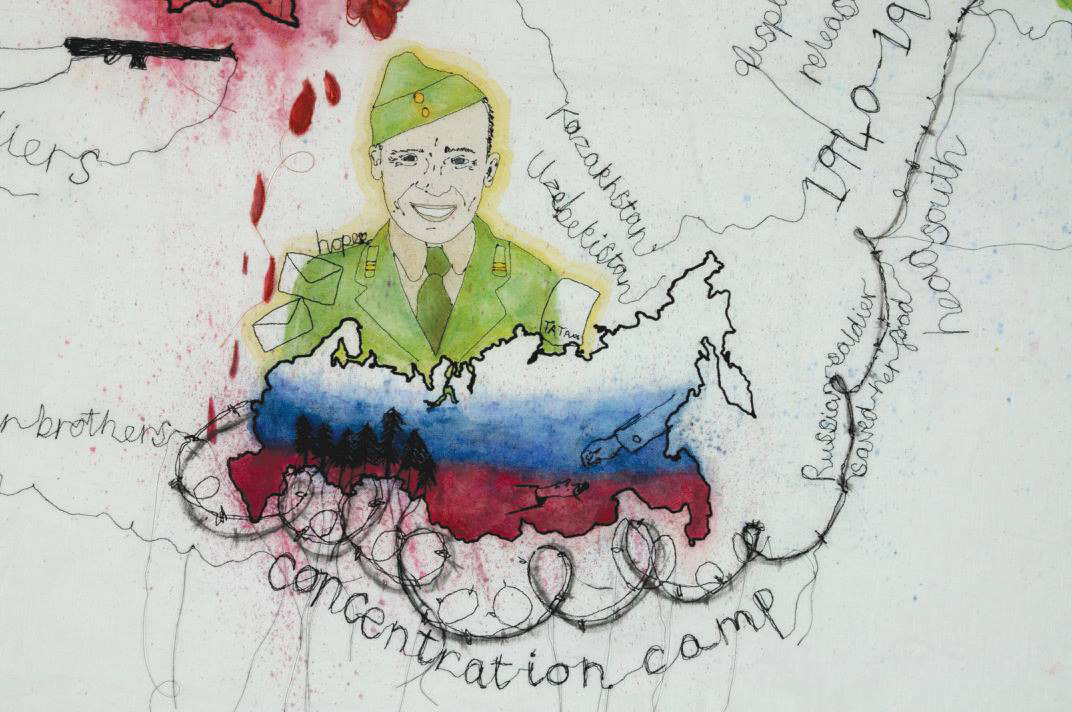
Russia
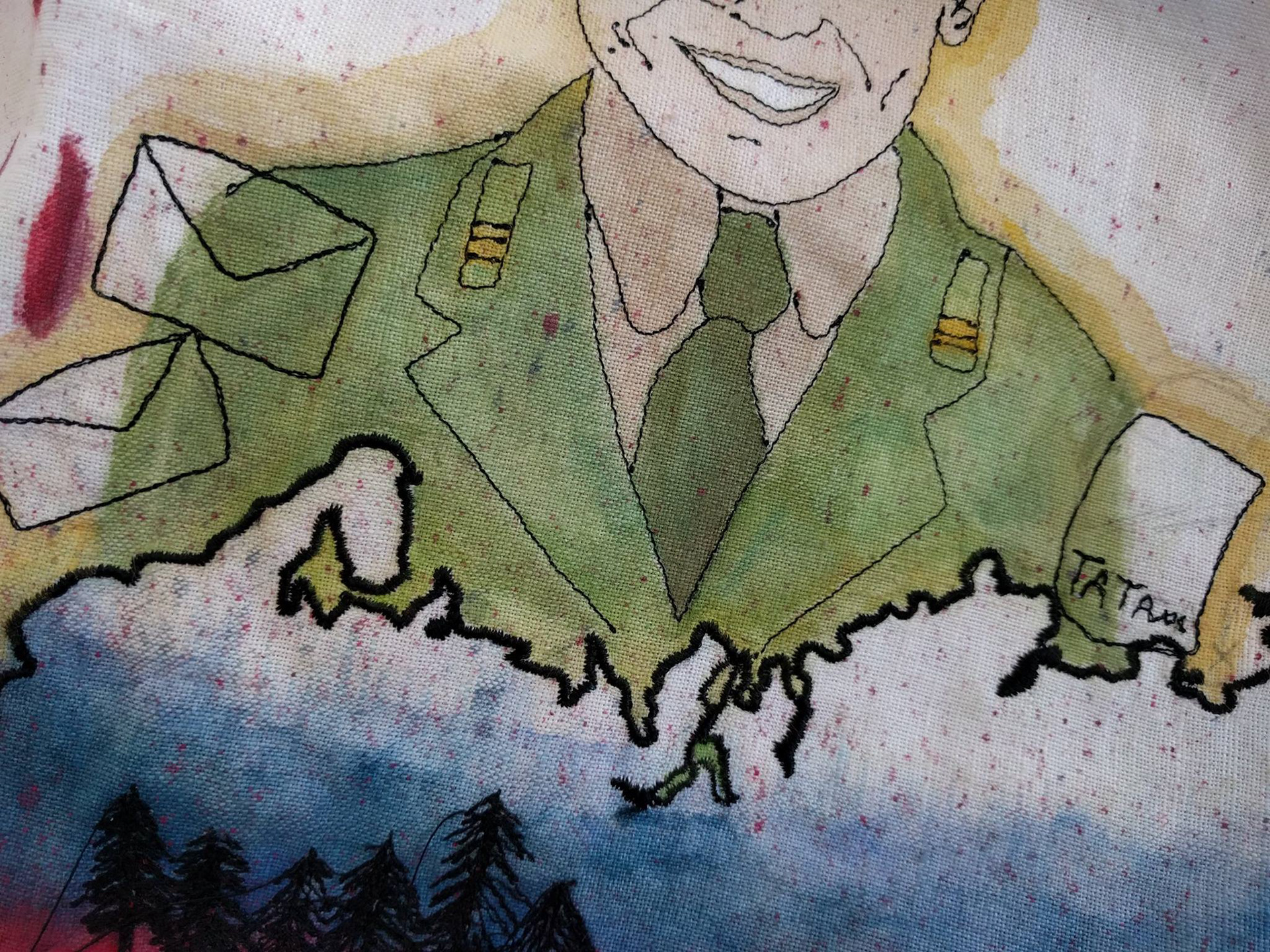
While in Russia Babcia speaks about one kind soldier who gave her a little of his meal to keep her going. Babcia’s father and brothers were sent to the Navy while the rest of the family were in concentration camps and planned to be taken to Africa.
While in Russia Babcia speaks about one kind soldier who gave her a little of his meal to keep her going. Babcia’s father and brothers were sent to the Navy while the rest of the family were in concentration camps and planned to be taken to Africa.
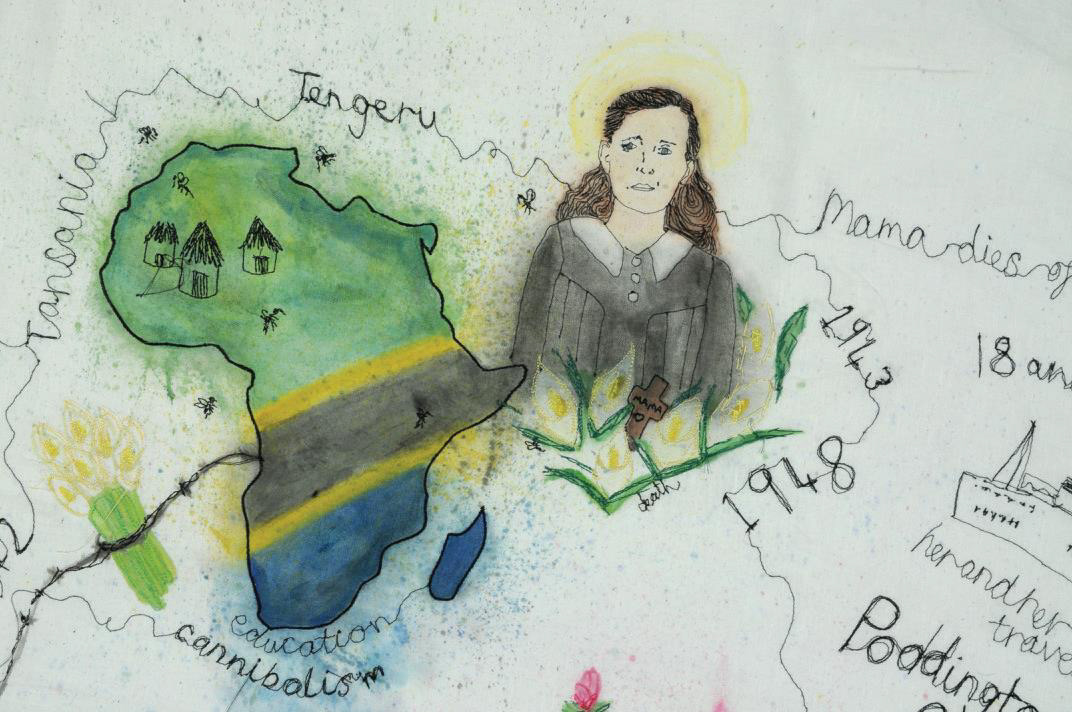
Africa
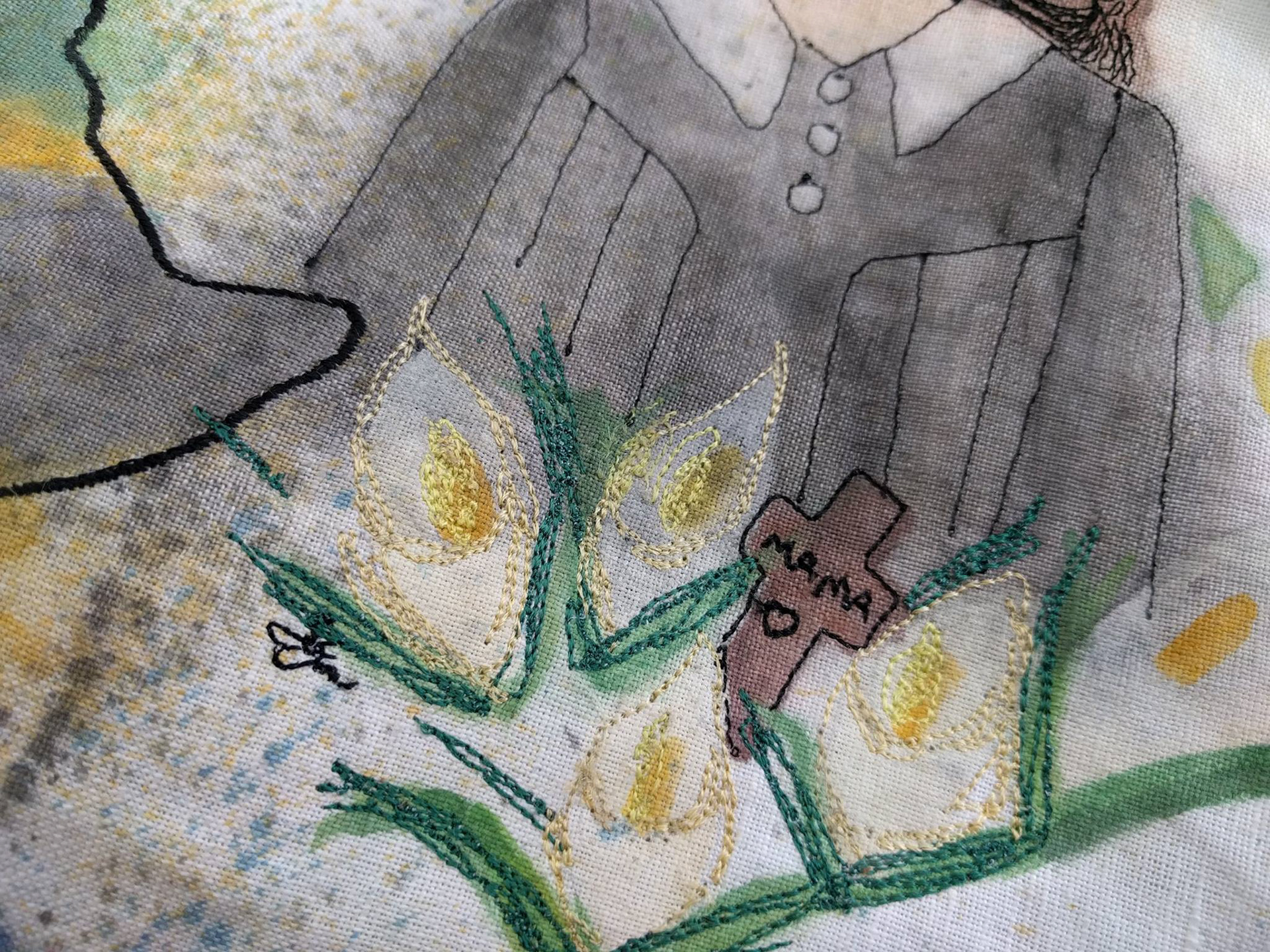
Babcia, her mother and her sister were sent to Africa with 4,000 other displaced Polish women and children. During this time Babcia and her sister attended school, lived in a hut made of clay, palm leaves and grass. During this time her mother contracted Malaria and passed away.
Babcia, her mother and her sister were sent to Africa with 4,000 other displaced Polish women and children. During this time Babcia and her sister attended school, lived in a hut made of clay, palm leaves and grass. During this time her mother contracted Malaria and passed away.
England
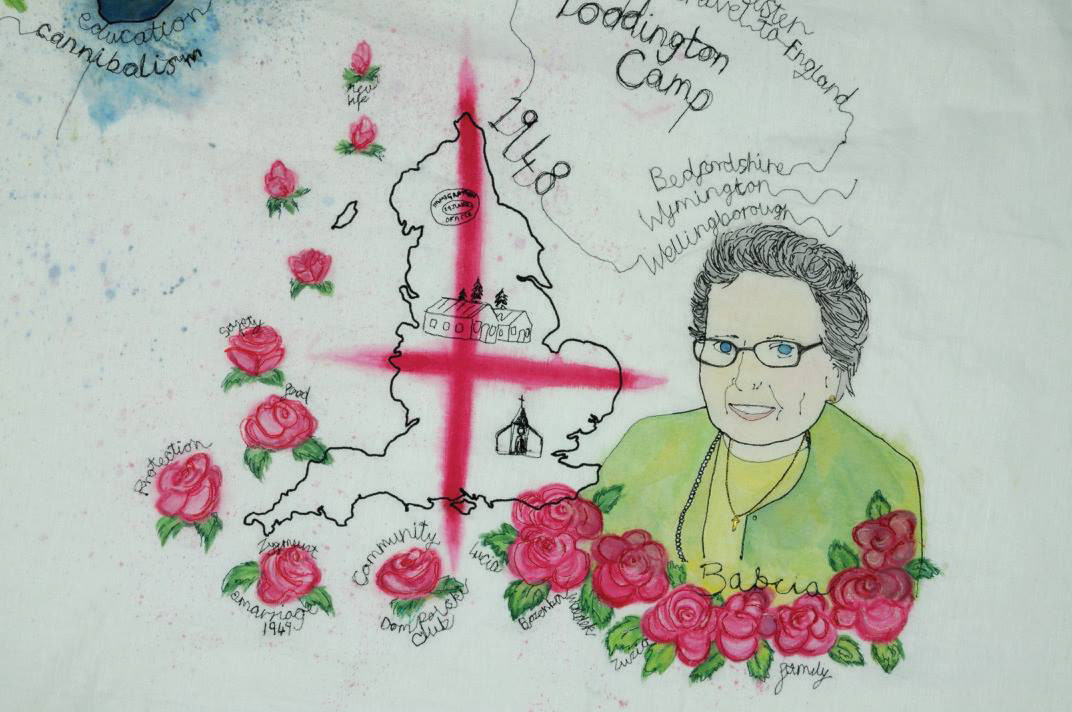
After 3 years in Africa Babcia and her sister were taken to England by boat. They were sent to Poddington camp where Babcia met Dziadek (my grandfather) they got married, they moved to Wymington, had 4 children, my mum, my Uncle Wal, Aunty Lucia and Aunty Bozenka.
After 3 years in Africa Babcia and her sister were taken to England by boat. They were sent to Poddington camp where Babcia met Dziadek (my grandfather) they got married, they moved to Wymington, had 4 children, my mum, my Uncle Wal, Aunty Lucia and Aunty Bozenka.